
The polished chandeliers of a Santa Barbara gala cast a warm, golden glow over the evening crowd, where California’s elite mingled with philanthropists and a scattering of Hollywood faces for what was meant to be a seamless night of charity and connection. Soft jazz floated through the air, glasses clinked gently, and conversations hummed with the easy confidence of people accustomed to privilege. Then, according to multiple witnesses, the atmosphere shifted in an instant.
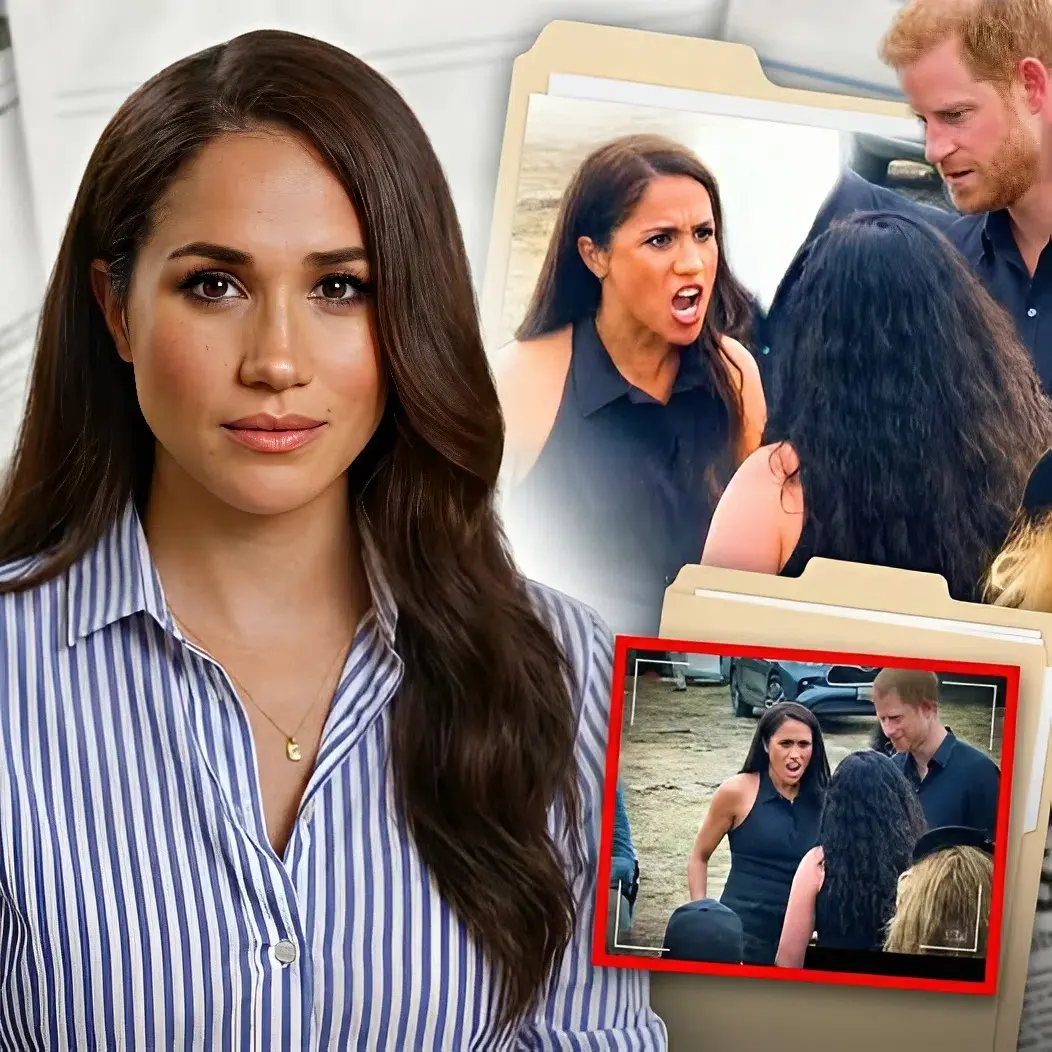
Meghan Markle, the Duchess of Sussex, reportedly turned sharply toward a guest who had addressed her without using her formal title. “I am the Duchess — remember that,” she is said to have snapped, her voice carrying across the immediate vicinity. When the guest did not immediately adjust their tone or acknowledgment, she allegedly fired back with, “Watch how you speak to me.” In seconds, witnesses described the room turning лед lạnh — ice cold — as side glances multiplied and polite smiles froze into awkward silence.
What had been a fluid, elegant gathering reportedly unraveled into tense pauses and whispered exchanges that lingered long after the moment passed.

Insiders who spoke on condition of anonymity painted a picture of a woman no longer radiating the effortless poise that once defined her public appearances. One attendee recounted the exchange as brief but electric, with Meghan’s posture stiffening and her eyes narrowing in clear irritation. The guest, described as a well-connected local figure rather than a royal insider, had apparently engaged her in casual conversation without the expected deference to her ducal status.
In the rarefied world of titled aristocracy — even one that has largely stepped away from active royal duties — such omissions can sting, especially for someone who has spent years navigating the delicate balance between celebrity and inherited prestige.
Another insider offered a sharper assessment: “That wasn’t confidence — that was someone clinging to status slipping through her hands.” The comment captures a recurring theme in discussions about Meghan since she and Prince Harry relocated to California. Once celebrated as a fresh, modern addition to the British monarchy, the Duchess has increasingly found herself the subject of scrutiny over perceived demands for protocol and recognition. At this particular gala, the exchange reportedly left several guests uncomfortable, with one later remarking that “respect isn’t demanded like that… it’s earned.
And the room knew it.” The brutal simplicity of that observation seemed to echo louder than Meghan’s own words, hanging in the air like an unspoken verdict on the evening.
The incident, though contained to a few charged minutes, quickly rippled through the attendees. Conversations that had flowed freely moments earlier grew more guarded. Some guests exchanged knowing looks, while others busied themselves with their drinks or phones to avoid being drawn into the unfolding discomfort. Charity events of this caliber are designed to foster goodwill and generosity, yet this one, according to reports, momentarily transformed into a stage where personal insecurities and public personas collided. The polished facade cracked, revealing the fragile dynamics that often underlie high-society gatherings where titles, wealth, and influence constantly negotiate their place.
This moment in Santa Barbara did not emerge in isolation. Meghan Markle’s post-royal life has been marked by a series of public narratives that oscillate between empowerment and vulnerability. After stepping back from senior royal duties in 2020 alongside Prince Harry, the couple sought a new chapter in Montecito, emphasizing privacy, family, and independent ventures. Their Netflix deals, Spotify projects, and philanthropic initiatives were framed as opportunities to tell their own story on their own terms. Yet, as time has passed, the shine of that fresh start has faced persistent questions.
Critics point to a pattern of perceived hypersensitivity to slights, whether real or imagined, while supporters argue that Meghan continues to battle entrenched biases rooted in race, class, and gender.
The gala exchange taps into a deeper conversation about the nature of status in contemporary society. In traditional royal contexts, titles carry centuries of protocol and expectation. The Duchess of Sussex holds a legitimate title granted by the late Queen Elizabeth II, and it remains part of her legal and public identity. However, in the democratic, celebrity-driven landscape of Southern California, formal titles often carry less automatic weight. Guests at such events are more accustomed to addressing people by first names or professional achievements rather than hereditary honors.
When someone insists on the full weight of a title, it can come across as anachronistic or insecure, particularly if the demand arises from a perceived lack of recognition.
One attendee’s recollection highlighted this tension. The guest in question had reportedly spoken to Meghan in the same relaxed manner they might use with any other notable figure in the room — friendly, direct, but without the bowing or “Your Grace” formality that might be expected in Buckingham Palace circles. Meghan’s response, according to witnesses, was swift and pointed. “I am the Duchess — remember that” carried both assertion and frustration, a declaration that seemed to demand immediate correction. The follow-up “Watch how you speak to me” escalated the exchange from mild correction to something more confrontational.
In the silence that followed, the temperature of the room dropped noticeably. People who had been laughing and networking moments before found themselves recalibrating their own behavior, unsure whether to intervene, laugh it off, or simply pretend the moment had not occurred.
The aftermath revealed much about the current state of Meghan’s public image. Supporters might interpret the incident as a woman simply standing up for herself after years of what she has described as unfair treatment by the media and institutions. In her own interviews and projects, Meghan has spoken eloquently about the challenges of identity, belonging, and the double standards faced by women of color in prominent positions. From this perspective, insisting on respect could be seen as a necessary boundary rather than an overreach.
Yet detractors view it differently — as evidence of a fragile ego struggling to reconcile the loss of institutional royal backing with the realities of life as a high-profile private citizen.
The insider who described the behavior as “clinging to status slipping through her hands” touched on a sensitive truth. Since leaving the UK, Meghan and Harry have built a brand centered on authenticity, mental health advocacy, and progressive causes. However, maintaining relevance in the competitive world of American philanthropy and entertainment requires constant adaptation. Titles that once opened doors in Britain do not automatically command the same reverence in California’s more egalitarian elite circles, where success is often measured by current influence, net worth, or cultural impact rather than lineage.
Shouting a title, as one observer later quipped, can paradoxically signal that the title no longer speaks for itself.
This dynamic is not unique to Meghan. History is filled with figures who transitioned from structured institutions to open societies and found the adjustment jarring. The British royal family itself has long grappled with modernity, balancing ancient traditions against public expectations of relatability. Meghan’s American background and previous career as an actress brought a different sensibility to the role — one that emphasized personal branding and emotional openness. When that approach meets resistance or indifference, the resulting friction can manifest in moments like the one described at the Santa Barbara gala.
Broader context adds layers to the story. The couple’s relocation was accompanied by explosive interviews, including the high-profile sit-down with Oprah Winfrey, in which they detailed experiences of racism and institutional rigidity within the monarchy. Those revelations won them sympathy from many quarters but also hardened opposition from traditionalists. Subsequent ventures — the Archewell Foundation, media projects, and public appearances — have met with mixed success. Some initiatives have been praised for their intentions, while others have drawn accusations of hypocrisy or performative activism. In this environment, every public interaction becomes magnified, scrutinized for signs of authenticity or entitlement.
At the gala, the charity cause itself — whatever specific organization it supported — faded momentarily into the background as attention shifted to the interpersonal drama. Attendees who came to write checks and network found themselves instead dissecting body language and whispered comments. The “tense silence and side glances” described by witnesses reflect how quickly social energy can pivot when hierarchy is challenged. In elite settings, discomfort is often masked with polished manners, but the undercurrents remain potent.
One guest reportedly later commented that the exchange felt like a microcosm of larger societal shifts: old expectations of deference clashing with new norms of equality and earned respect.
The brutal line that reportedly echoed afterward — “If you have to shout your title… you’ve already lost it” — distilled the evening’s lesson with cutting precision. It suggests that true authority and respect flow naturally from character, accomplishments, and consistent behavior rather than from insistent reminders of rank. In an age where social media amplifies every misstep and public figures are held to standards of vulnerability and humility, demanding protocol can appear tone-deaf.
Meghan has built much of her post-royal narrative around empowerment and breaking barriers, yet moments like this invite questions about whether those ideals fully align with her personal conduct in private settings.
Prince Harry’s presence, or absence, during the incident remains unclear from available accounts. The couple often appears together at public events, presenting a united front. Harry has spoken openly about his own struggles with royal life and his desire to shield his family from similar pressures. His support for Meghan has been unwavering in public statements, yet the challenges of navigating their new reality together continue to unfold. Whether this gala moment reflected accumulated stress from ongoing media scrutiny, parenting responsibilities, or professional setbacks is impossible to know from the outside.
What is evident is that life after royalty has not been the uncomplicated liberation some anticipated.
Public reactions to such stories tend to split along familiar lines. Royal watchers and tabloid audiences seize on the anecdote as further proof of diva-like behavior, while Meghan’s defenders dismiss it as exaggerated gossip designed to undermine a woman who dares to defy convention. The truth, as always, likely resides somewhere in the messy middle. Human beings are complex, and high-pressure environments — even glamorous ones — can expose raw nerves. A single sharp exchange does not define a person, but when it aligns with existing narratives, it gains disproportionate weight.
In the days following the reported incident, the Santa Barbara gala slipped back into relative quiet. Charity funds were presumably raised, photographs were taken, and life moved on for most attendees. For Meghan Markle, however, the episode serves as another chapter in an ongoing public reckoning. Her journey from Suits actress to Duchess to California-based influencer has been anything but linear. Each public moment invites reinterpretation: Is she asserting hard-won boundaries, or revealing insecurity? Is she evolving beyond outdated institutions, or struggling to find footing in a world that no longer automatically defers to her title?
Ultimately, the gala story underscores a timeless observation about power and perception. Titles, whether royal, professional, or self-proclaimed, derive their strength from external validation as much as internal conviction. When that validation wanes — whether due to distance from the source institution or shifting cultural norms — the impulse to demand recognition can intensify. The room at the Santa Barbara event, according to those present, sensed the disconnect immediately. Respect, as one attendee noted, is not extracted through commands; it accumulates through actions that inspire it organically.
Meghan Markle remains a figure of fascination precisely because her story embodies so many contemporary tensions: tradition versus modernity, identity and belonging, fame and authenticity. The reported words “I am the Duchess — remember that” may have been spoken in a moment of irritation, yet they reverberate beyond the gala walls. They invite reflection on what it means to hold status in a society that increasingly questions inherited privilege while still craving the glamour it represents.
In the end, the evening’s most lasting impression may not have been the charity work or the elegant setting, but the quiet realization that echoed among the guests: true presence does not need to announce itself so loudly.
As Meghan and Harry continue to chart their independent path, incidents like this one will likely keep surfacing in public discourse. Each offers a lens through which observers project their own biases and hopes. For some, it reinforces skepticism about the couple’s post-royal reinvention. For others, it highlights the impossible standards applied to women who refuse to shrink themselves. Whatever the interpretation, the Santa Barbara gala serves as a reminder that the transition from royal life to private citizenship is rarely seamless.
Status, once granted by monarchy, must now be continually earned in the court of public opinion — a far more fickle and unforgiving arena.
The ice-cold silence that reportedly descended on the room that night may have thawed by morning, but the questions it raised linger. In a world quick to celebrate self-made success yet ambivalent about those who carry remnants of inherited title, how does one navigate with grace? Meghan’s reported insistence on her ducal identity suggests an ongoing attachment to a chapter that, while formally closed, still shapes her sense of self. Whether that attachment strengthens or hinders her future endeavors remains to be seen.
What is clear is that demanding remembrance is one thing; earning it, night after night in rooms filled with equals, is quite another.
(Word count: approximately 1,520)